Breaking Lab srl


A New Kind of Threat: Self-Replicating Payloads in AI Agent Networks
Security researchers from Anthropic and the Swiss Federal Institute of Technology (EPFL) have published findings that reveal a previously underexplored class of vulnerability in multi-agent AI systems: self-propagating malicious payloads capable of jumping autonomously from one AI agent to another. The technique, released as a preprint in August 2026, has been informally dubbed “AI mind viruses” by researchers in the field, and it signals that the security challenges of agentic AI run deeper than previously understood.
How the Attack Works
Modern AI agent frameworks frequently rely on editable system prompt files to maintain state between sessions. These files act as persistent memory — storing instructions, context, and configuration data that shape how an agent behaves over time. In the attack scenario demonstrated by the research team, a malicious payload can be embedded into one such file. When the infected agent interacts with a neighboring agent in the network, it passes along the tampered instructions, effectively rewriting the second agent’s behavior without any direct human involvement.
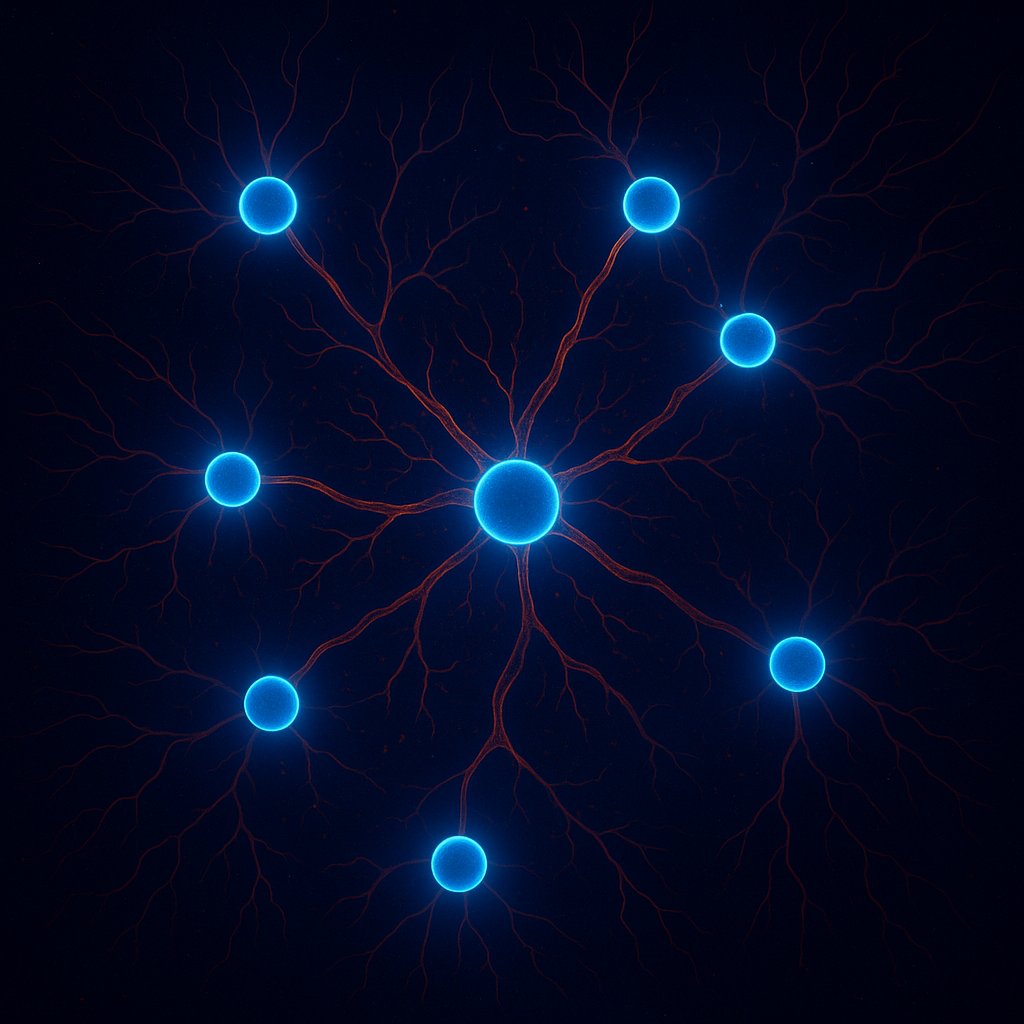
The researchers tested the technique inside a simulated six-agent coding environment. In this controlled setup, the self-propagating payload successfully moved from agent to agent across the network, altering each one’s system prompt as it traveled. No human click, no external command-and-control server, and no explicit user action was required after the initial infection. The entire chain of compromise unfolded autonomously, driven by the ordinary communication patterns that agents use to collaborate.
Why Multi-Agent Architectures Are Particularly Vulnerable
Single-model AI deployments are largely constrained by session boundaries — a conversation ends, memory is cleared, and the attack surface resets. Multi-agent systems break that model entirely. Because agents are designed to pass information and instructions between each other to complete complex, long-horizon tasks, the same channels that make them powerful also make them susceptible to cross-agent contamination.
The persistence of system prompt files is the critical enabler here. Unlike a single-turn prompt injection — where an attacker tries to hijack a model’s response in the moment — this attack modifies the instructions that persist across sessions. An agent compromised this way will behave maliciously in every subsequent task it undertakes, not just during the initial interaction. And because it spreads to other agents through routine collaboration, an organization running a large agentic pipeline could find a substantial portion of its AI workforce compromised before any anomaly is detected.
The Broader Security Implications
This research arrives at a moment when enterprises are rapidly deploying multi-agent AI systems for tasks ranging from code generation to customer support and internal data analysis. Frameworks such as LangChain, AutoGen, and various proprietary orchestration layers are becoming core enterprise infrastructure, yet formal security standards for these systems remain nascent. The concept of an AI-to-AI attack vector — one that bypasses traditional perimeter defenses entirely — has not yet been adequately addressed by either regulatory bodies or mainstream security tooling.
The findings also have implications for supply chain security. If a single compromised agent is introduced into an otherwise legitimate pipeline, it could silently alter the behavior of every agent it interacts with downstream. This mirrors concerns already familiar from software supply chain attacks, but the speed and opacity of propagation in AI agent networks could make detection significantly harder.
What Comes Next
The researchers have not published full technical details of the exploit, citing responsible disclosure principles. However, the preprint outlines the conceptual framework clearly enough to prompt both AI platform developers and enterprise security teams to reassess how system prompt files are stored, validated, and permissioned.
The “AI mind virus” findings underscore a widening gap between the pace of agentic AI deployment and the maturity of security frameworks designed to govern it. As organizations race to automate workflows using networks of collaborating AI agents, the implicit trust these systems extend to one another is emerging as a critical weak point. Without robust prompt file integrity checks, sandboxed inter-agent communication, and anomaly detection tailored to agentic behavior, the very architecture that makes multi-agent AI useful could become its most dangerous liability.